A live streaming SaaS
A focused product for teams that need to get a scheduled live broadcast from a source to a dependable viewing page.
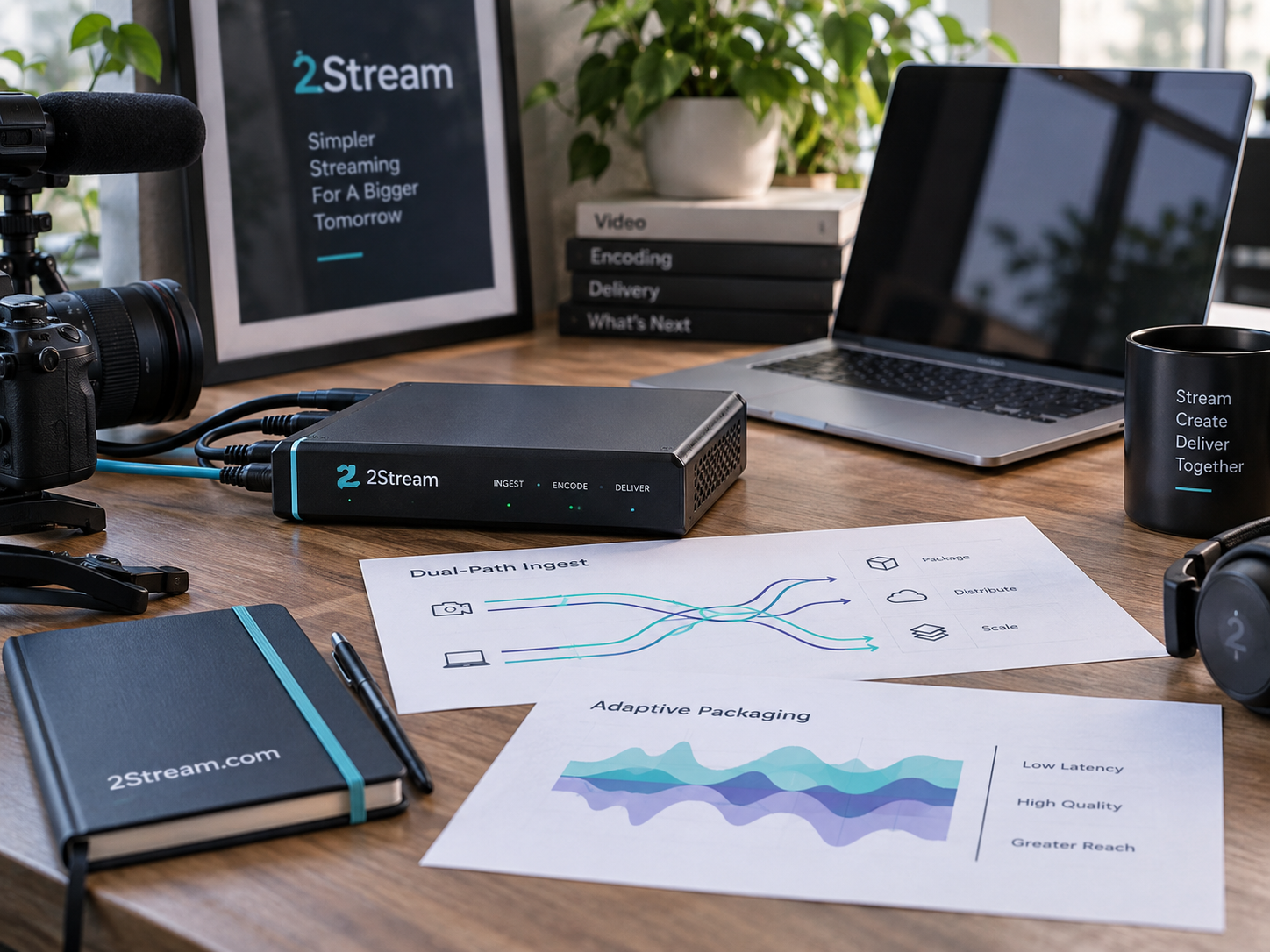
A useful streaming product begins with one repeatable broadcast, not a wall of settings. A small education business might run a weekly lesson. A software company might host a regular customer demonstration. Both need a clear route from a camera to a viewing page, with someone able to tell whether the broadcast is ready. A possible 2Stream product could concentrate on that handoff.
This is an illustrative business concept for a future owner of 2Stream.com. The proposed software, features, and examples describe a direction to explore. The domain would provide the identity; the team would still need to build and operate the service.
Choose the person responsible for going live
Start with a producer who runs scheduled broadcasts for a small organization. That person probably coordinates speakers, checks audio, shares a viewing link, and answers the message asking where the recording went. Interviews should follow the whole working day. Ask what happens an hour before the event, what creates a last-minute scramble, and what must be delivered afterward.
An engineer and a producer may describe the same problem differently. The engineer sees an input connection and a playback URL. The producer sees a guest waiting backstage and a calendar invitation containing yesterday’s link. Choose which person gets the first product experience. Trying to serve both equally from the first screen can make a simple job feel technical.
Make the first offer a complete broadcast workflow
A narrow first offer could include a reusable event template, a source check, a branded viewing page, and a clear recording handoff. Each element should answer a question the producer already asks. Is the source connected? Is sound arriving? Which page should attendees open? Who receives the recording when the session ends?
The underlying building blocks are established. Mux’s live streaming guide describes creating a live stream, connecting broadcast software, and using a playback identifier. That is category context, not evidence that a future 2Stream product has those capabilities. A product team would need to choose its infrastructure and test its own implementation before describing supported workflows to customers.
Avoid building a large settings catalogue just because an infrastructure provider exposes one. The value of this concept would be the decisions it removes from an ordinary broadcast. Keep technical controls available where needed, but give the producer a clear default path and plain explanations of changes that affect the show.
Let the brand describe the product’s territory
2Stream could suit a software company that works across live sources and viewing destinations. The digit offers room for a dual-output product story, while Stream gives the product a familiar category cue. A homepage could lead with the exact job: prepare a live session and send viewers to the right place.
The strongest demonstration would show a real, completed workflow once software exists. Until then, use a simple diagram and describe the concept honestly. A future brand should not depend on implying that a particular platform has endorsed the product or that every destination behaves the same way.
Work through a concrete pilot
Consider a training provider preparing a monthly session for existing customers. In this illustrative pilot, the coordinator creates the event on Monday, rehearses with the presenter on Wednesday, and broadcasts on Friday. The same viewing link appears in the invitation and reminder. After the session, the coordinator checks the recording before sharing it.
A useful pilot would record each point where the coordinator needed outside help. Perhaps the presenter selected the wrong microphone. Perhaps an old event title appeared on the viewing page. Perhaps the recording was available but nobody knew who could publish it. Those observations should decide the next release, rather than a list of impressive features assembled in advance.
Give the pilot a written finish line. The coordinator should be able to prepare, rehearse, run, and close the session using a short checklist. If an engineer must remain beside them throughout, the product still has work to do before it can make a self-service promise.
Find customers through the workflow
One credible distribution path is an educational guide built around a specific recurring event. A practical rehearsal checklist can reach producers searching for help before a broadcast. A companion walkthrough could use OBS Studio’s official overview to orient readers who already use broadcast software, while keeping the product’s own instructions separate.
Follow that resource with an invitation to discuss a pilot. Ask applicants how often they broadcast and who owns the event. That produces a more useful conversation than attracting everyone who happens to be interested in video. Partnerships with production consultants could also make sense once the product has a repeatable handoff they can trust.
Plan the obligations behind the interface
A scheduled event creates support expectations. Decide who handles access problems, how urgent reports are received, and what happens outside staffed hours. Establish a procedure for expired credentials and failed recordings. Explain those limits before a customer commits an important event to the service.
Usage costs deserve their own worksheet. Estimate the inputs, viewing time, storage, and support work for the chosen customer pattern. Use current supplier information when building that worksheet; avoid presenting a universal cost per event. The first offer should be simple enough for customers to understand and specific enough for the operator to support.
Take the concept one step further
Write a one-page description of the flagship workflow before drawing the full application. Include the producer, source, audience, event frequency, and expected recording handoff. Then speak to a few people who already perform that work and revise the offer around what they actually struggle to complete.
For a team ready to give this product a permanent identity, 2Stream.com is available for acquisition. An inquiry can explain the software direction and preferred purchase platform. GoDaddy or Escrow.com can be discussed as part of an agreed transaction. Any inclusion of site assets should be confirmed separately.
Acquire 2Stream.com
Put a clear streaming identity behind the next product, channel, or service. Share the intended use to begin a conversation.
Inquire about 2Stream.com